
Board Approval Is Just the Beginning: The 12-Stage Capital Project Life Cycle Every Leader Must Understand Before Breaking Ground
For most business leaders, board approval feels like the finish line. For a capital project, it is the starting gun. This is a guide to the twelve stages that follow — and to the decisions that determine whether your project delivers the business case the board approved.
12 stages of a capital project life cycle — from Business Case Feasibility and site selection through detail design, construction, commissioning, handover, and operations — illustrating the sequential stages an owner must navigate from board approval to first production.
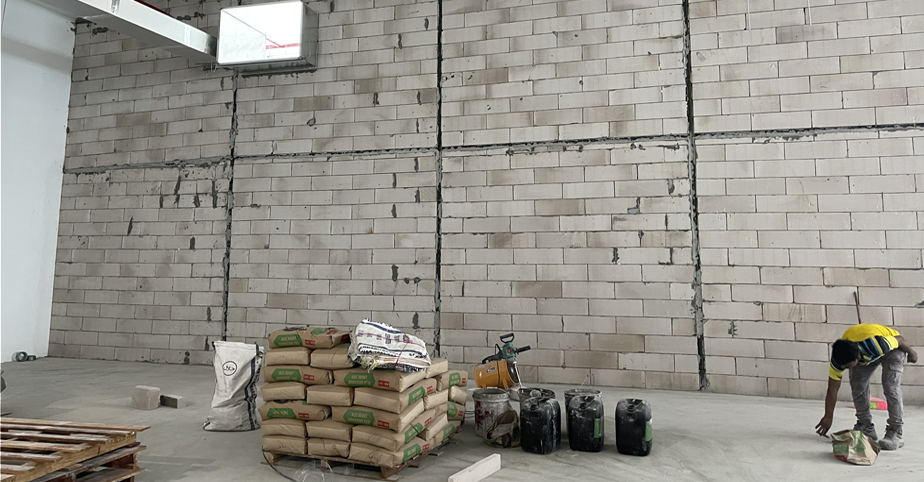
Construction underway: by Stage 8, the scope defined (or left undefined) in the preceding seven stages determines whether the project delivers the business case the board approved (Illustrative image).
Jonathan Smith, CEO of Cleanbrane LLC, had just secured board approval for the strategy to build a new manufacturing facility in Vietnam. For Cleanbrane, a US-based proprietary membrane technology company serving the industrial and pharmaceutical sectors, this was the company's first operation outside the United States — a strategic bet to diversify its supply chain, tap into Asia's lower-cost inputs, and serve its fastest-growing customer base directly.
The business case was sound. A site near Ho Chi Minh City had been shortlisted, operational capacity estimated, and a high-level cost roughed out in round millions. And yet, the night after the board presentation, Jonathan found himself stopped by a single PwC capital project statistic: only 5.4% of projects are completed within budgeted cost and time.More than 51% of surveyed projects have final costs more than 50% above budget, and projects exceeding budget by 100% or more are not rare.
What Makes Capital Projects Different
Capital projects — new manufacturing plants, capacity expansions, infrastructure upgrades — differ from operational expenditure not just in scale, but in how they are financed and their irreversibility. They are typically funded through construction loans or capital raised against the project's projected future revenues, meaning cost overruns do not just exceed a budget line — they directly affect debt serviceability and investor returns before the asset has generated a single dollar of income.
External capital spending can represent 80% or more of the total project budget. A well-executed project can improve the investment's net present value by up to 15%; a poorly managed one can impose years of higher costs and competitive disadvantage.
Capital Project Life Cycle
1. Business Case Feasibility (Market-Specific)
Define the market opportunity and articulate the full business case for the capital investment. This covers market analysis and demand forecasting for the target geography; competitive landscape and strategic positioning; business objectives the facility must deliver — capacity, product range, service level, or market share targets; indicative project timeline from sanction to first production;
High-level total project cost and funding structure; target return on investment and payback period; and the financial sensitivity of the business case to cost overruns and schedule delays.
The output is a board-level investment proposal that answers one question: is there a compelling and financially sound reason to build in this country, at this scale, at this time? Ends with board or leadership approval to proceed to site-specific feasibility.
2. Capital Project Feasibility(Site-Specific)
Assess and compare shortlisted sites for physical and technical suitability, covering location, size, access to roads and transportation, capacity and reliability of electricity supply, water and drainage, and other environmental considerations.
Evaluate the regulatory and permitting landscape, local labour and contractor market availability, and logistics.
Develop a zoning plan of the facility to establish the approximate footprint, functional zones, and adjacency requirements.
Produce a high-level capital cost estimate based on industry benchmark construction costs per unit of floor area across a spectrum of building standards and specifications to reflect the range of possible outcomes.
Ends with a gate decision selecting the preferred site and confirming the project is viable to develop further.
3. Operational Requirements & Scope Development
Define what the facility must do — production capacity, throughput, process requirements, regulatory compliance standards, and quality specifications.
All functions that will operate or depend on the facility — including production, maintenance, quality, environment, health and safety, and logistics — must be actively involved from this stage onwards.
This is the user brief from which all subsequent technical work is derived. Misalignment or incompleteness at this stage cascades as compounding cost and scope problems through every stage that follows.
Ends with a gate review approving the high-level operational requirements.
4. Conceptual Design
Define how the operational requirements can be achieved by physical and technical specifications.
Comprehensive site survey is also conducted here — geotechnical investigation, environmental assessment, existing utilities, and boundary confirmation must be completed before building and equipment requirements can be finalised. Schematic layout and design options are prepared and discussed.
Ends with a gate review approving a single preferred option.
5. Preliminary Design
Building on the approved requirements, the preferred design concept is developed to the next level of details: site layout, building footprint, and external works are refined; internal circulation patterns established for people, materials, and goods; spaces sized and functional adjacencies confirmed; building services systems scoped at single-line diagrams; and front-of-house style and branding defined to reflect the company's identity.
The stage produces a preliminary design report and an updated cost estimate, forming the basis for the detailed design work that follows.
6. Detail Design, Drawing & Specification Documentation
Operational processes are translated into the greatest level of technical detail practicable, with confirmed or representative selections of specialist equipment and all building services requirements and interfaces fully resolved.
Develop detailed engineering drawings, specifications, and a control-grade cost estimate.
Produce the full project execution plan covering contracting strategy, procurement, construction methodology, commissioning, and start-up.
7. Tender & Contract or Work Packages Award
Prepare tender documents based on the completed drawings and specifications.
Issue tender, evaluate bids, negotiate, and award contract.
The quality and completeness of Stage 6 directly determines the competitiveness of pricing, the accuracy of risk allocation, and the owner's exposure to variation claims during construction.
This is the contractual and financial point of no return: scope changes after this stage carry full construction-cost consequences.
8. Construction
Commences with site hoarding, temporary utilities connections, and site office establishment.
Detailed engineering, construction details and methods, procurement of long-lead equipment, site preparation, and construction proceed in planned sequence.
Cost and schedule are most exposed in this stage if front-end design and decisions were incomplete.
The owner's representative or project management team maintains active oversight throughout.
9. Testing, Commissioning & Pre-Handover
With all construction and installation works substantially complete, the contractor demonstrates to the owner that all systems meet contractual requirements through systems integration testing, functional testing, and performance testing against guaranteed outputs.
Regulatory inspections are completed and operating permits obtained.
Defects identified during testing are remediated before handover is accepted.
10. Handover
Formal transfer of the completed asset from contractor to owner.
The contractor demobilises from site.
Deliverables include as-built documentation, warranties, operating and maintenance manuals, and training of operations personnel.
11. Operations
The asset enters productive use, generating the revenues that service the construction financing and deliver the business case approved.
12. Maintenance & Repair
Planned preventive maintenance, corrective repair, and capital expenditure for asset life extension.
Equipment specifications and design standards established in Stage 4 directly determine the cost and complexity of maintenance throughout the asset's operating life.
Understanding the life cycle makes one thing clear: these twelve stages occur on every capital project. The sequence does not change. What changes is how the owner structures its engagement with the market across those stages, which determines how cost, risk, and control are distributed between owner and contractor.
Read about procurement methods available to an owner like Jonathan: what each one actually delivers, who bears the risk under each, and why the choice of procurement approach is inseparable from the quality of preparation that precedes it.
Notes and References:
Cleanbrane LLC and Jonathan Smith are fictitious. The scenario is constructed for illustrative purposes.
PwC, Correcting the Course of Capital Projects: Plan Ahead to Avoid Time and Cost Overruns Down the Road (April 2013).
Supports: the 5.4% on-budget/on-time statistic; 51% of projects exceeding budget by more than 50%.
Boston Consulting Group, Capital Procurement: The Cornerstone of Successful Projects, Robert Tevelson, Andreas Gocke, Andreas Alsén, Matthias Tauber, and Stefan Benett (October 2013).
Supports: NPV improvement of up to 15% for well-executed projects; competitive disadvantage of poorly managed ones.
Independent Project Analysis, Inc. (IPA) / Merrow, E.W.
The FEL (Front-End Loading) framework — specifically FEL 1 (business case), FEL 2 (scope development), and FEL 3 / FEED (detailed engineering) — is IPA's proprietary benchmark framework and the structural basis for Stages 1 through 6 of the life cycle as described.